 listicle
7 Early Signs of Perimenopause in Your 40s
Table of Contents
- 1. Irregular Periods and Unpredictable Menstrual Cycles
- 2. Hot Flushes and Night Sweats
- 3. Mood Changes and Brain Fog
- 4. Sleep Disturbances and Fatigue
- How to Track Perimenopause Symptoms Effectively
- Perimenopause Symptoms and NHS Guidance
- When to See a Doctor for Menopause Concerns
- Frequently Asked Questions
Last Updated: October 2, 2026
1. Irregular Periods and Unpredictable Menstrual Cycles
Irregular periods are often the first of the perimenopause signs 40s women experience as perimenopause is beginning. Your cycle might become longer, shorter, heavier, or lighter than usual. Some months you might skip a period entirely, then have it return the next month.
The pattern varies widely. Some women experience cycles that stretch from 21 to 60 days. Others have two periods in one month, then nothing for three months.
What makes this confusing is that irregular periods don't automatically mean perimenopause. Stress, thyroid conditions, and other health issues can cause similar changes. That's why tracking your actual cycle patterns becomes essential.
Many women find that keeping a simple calendar or using a period-tracking app removes the guesswork. You'll spot patterns you might otherwise miss. If your cycle has been regular for years and suddenly becomes erratic, that's worth discussing with your healthcare provider.
2. Hot Flushes and Night Sweats
Hot flushes are among the most recognisable perimenopause signs 40s women report, affecting many in this age group. A hot flush is a sudden wave of intense heat that spreads across your chest, neck, and face.
Night sweats are essentially hot flushes that occur while you're sleeping. You might wake up drenched in sweat, needing to change your bedding and clothes.
These symptoms happen because of falling oestrogen levels. Your brain's temperature regulation centre becomes more sensitive to small changes in core body temperature.
Frequency and intensity vary tremendously. Some women have one or two flushes daily. Others experience them dozens of times. Some women barely notice them; others find they're debilitating enough to interfere with work or social situations.
Managing flushes means identifying your personal triggers. Common ones include hot drinks, spicy food, alcohol, warm environments, and stress. Wearing layers helps, you can remove clothing quickly when a flush starts.
3. Mood Changes and Brain Fog
Mood swings during perimenopause can feel extreme and unpredictable. You might feel tearful one moment and irritable the next. Some women describe feeling emotionally raw or more anxious than usual.
Brain fog, difficulty concentrating, forgetfulness, and mental cloudiness, often accompanies mood changes. You might struggle to find words mid-conversation, forget why you walked into a room, or lose track of what you were doing.
Hormonal fluctuations directly affect neurotransmitters like serotonin and dopamine, which regulate mood and cognitive function. As oestrogen levels drop, your brain adapts to lower hormone levels. This transition period can feel disorienting.
Sleep disruption makes everything worse. When night sweats and hot flushes wake you repeatedly, your brain doesn't get the deep sleep it needs. Poor sleep amplifies mood changes and intensifies brain fog.
It's important to distinguish between normal perimenopause mood changes and clinical depression or anxiety.
4. Sleep Disturbances and Fatigue
Sleep problems during perimenopause go beyond night sweats. You might struggle to fall asleep, wake frequently during the night, or wake too early and can't get back to sleep.
Falling oestrogen levels affect sleep architecture, the natural progression through different sleep stages. Your brain spends less time in deep, restorative sleep.
The fatigue that follows is real and significant. You might feel exhausted despite seemingly adequate sleep. Afternoon crashes are common. Some women describe a bone-deep tiredness that doesn't improve with rest.
Night sweats and hot flushes directly disrupt sleep, but hormonal changes also affect sleep quality independent of these symptoms. Your body's natural sleep-wake cycle (circadian rhythm) becomes less stable.
Practical strategies help. Keep your bedroom cool, around 16-18°C is ideal. Use breathable bedding. Avoid caffeine after 2 p.m. and alcohol in the evening, both of which interfere with sleep quality.
How to Track Perimenopause Symptoms Effectively
Tracking symptoms creates clarity where perimenopause often brings confusion. You'll spot patterns, notice what triggers your symptoms, and have concrete information to share with your healthcare provider.
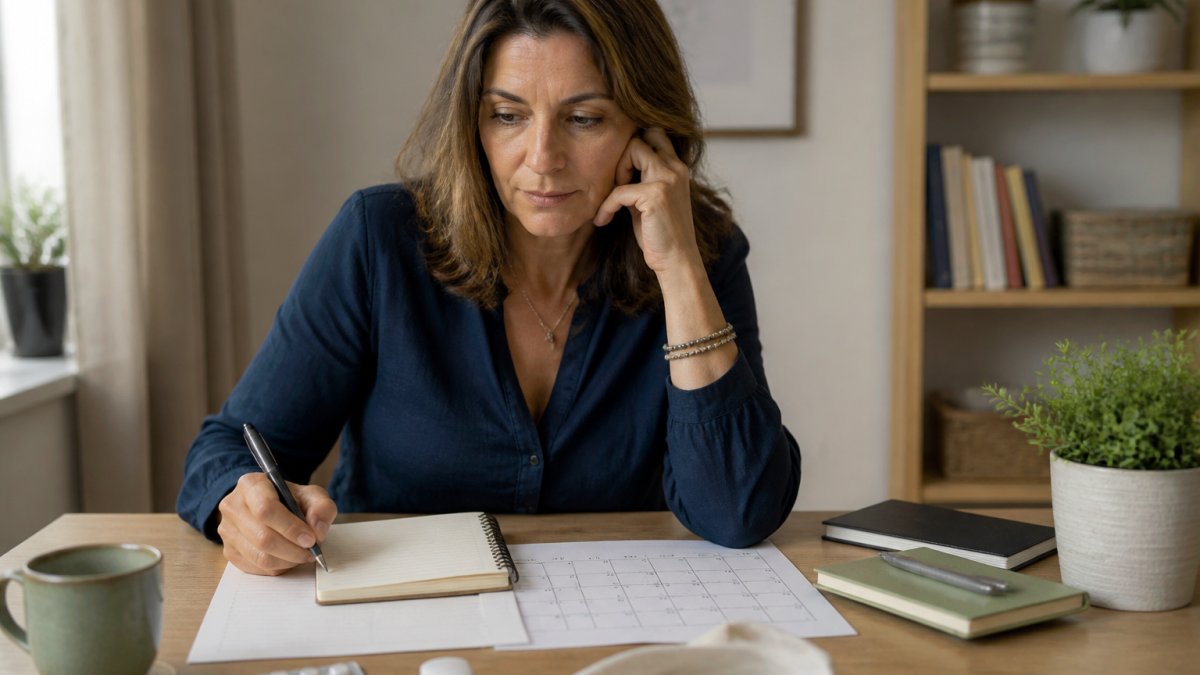
Start with a simple calendar or period-tracking app. Record the dates your period starts and ends. Note the flow (light, medium, heavy).
After four to six weeks, patterns emerge. You might notice that flushes worsen after spicy food or alcohol. Mood changes might cluster around certain times of your cycle.
Create a simple symptom tracker using columns for:
- Date
- Period (yes/no, flow level)
- Hot flushes (number, severity)
- Sleep quality (1-10)
- Mood (1-10)
- Energy (1-10)
- Triggers noted
- Other symptoms
Many women find that the act of tracking itself feels helpful. You're taking an active role in understanding your body rather than feeling like symptoms happen to you randomly.
Bring your tracker to appointments with your GP or specialist.
| Tracking Method | Best For | Ease of Use |
|---|---|---|
| Paper calendar | Women who prefer writing things down | Very simple |
| Spreadsheet | Those comfortable with data entry | Straightforward |
| Period-tracking app | Women wanting automated reminders | User-friendly |
| Symptom diary | Detailed pattern analysis | Requires consistency |
| Combination approach | Comprehensive overview | Most thorough |
Perimenopause Symptoms and NHS Guidance
The NHS recognises perimenopause as a significant health stage affecting many women. According to NHS guidance on menopause and perimenopause, perimenopause symptoms in 40s warrant medical assessment and support.
Your GP can help determine whether your symptoms are perimenopause-related or caused by another condition. They might recommend blood tests to check your hormone levels, though diagnosis is primarily based on your symptoms and age rather than test results alone. The NHS menopause information service provides detailed guidance on what to expect and when to seek help.
NHS treatment options include lifestyle changes, hormone replacement therapy (HRT), and other medications. HRT replaces oestrogen and progesterone to ease symptoms. Not every woman needs or wants HRT, some manage well with lifestyle adjustments alone. Your GP will discuss options suited to your circumstances, medical history, and preferences.
The NHS also recognises that perimenopause affects mental health and overall wellbeing. If you're experiencing mood changes, anxiety, or depression, mention this to your GP. These symptoms are treatable, and support is available.
Many women benefit from specialist care during perimenopause. For complex cases, severe symptoms not responding to standard treatment, concerns about gynaecological cancer, or complicated medical histories, specialist assessment can be valuable. Mr Javaid Muglu provides expert gynaecological care for perimenopausal women, offering rapid diagnostic assessment and personalised treatment plans through One Stop clinics combining consultation and scan in a single appointment.
When to See a Doctor for Menopause Concerns
Not every perimenopause symptom requires medical attention, but certain situations warrant seeing your GP or a specialist. If your symptoms significantly affect your quality of life, disrupting sleep, work, relationships, or daily activities, discuss this with your healthcare provider.
See your GP if:
- Your periods become extremely heavy or last longer than seven days
- You experience vaginal bleeding after 12 months without a period (this may indicate postmenopause, but unusual bleeding needs checking)
- You're concerned about your mood or mental health
- Symptoms don't improve with lifestyle changes after several weeks
- You have a personal or family history of certain cancers and want specialist assessment
- You're unsure whether your symptoms are perimenopause-related
Rapid assessment is important if you notice unusual vaginal bleeding, pelvic pain, or other symptoms that might suggest gynaecological conditions beyond perimenopause. Early identification and treatment of gynaecological problems prevents complications and provides peace of mind.
For women with complex medical histories, severe symptoms, or concerns about cancer risk, specialist gynaecological care offers advantages. A specialist can conduct thorough assessment, arrange appropriate investigations, and develop personalised management plans. The British Menopause Society provides information on finding accredited specialists if you want expert support beyond your GP.
Many women find that having their concerns taken seriously makes an enormous difference. If your GP dismisses your symptoms or suggests you simply "live with it," seeking a second opinion, whether from another GP or a specialist, is reasonable.
Perimenopause in your 40s brings real physical and emotional changes that deserve proper attention and support.
Frequently Asked Questions
What is the very first sign of perimenopause in your 40s?
The most common first sign is a change in your menstrual cycle. You may notice periods becoming longer or shorter, arriving earlier or later than usual, or skipping months entirely. Some women also report hot flushes or mood changes before their periods become noticeably irregular. These changes reflect fluctuating oestrogen and progesterone levels as your body transitions towards menopause. If you notice significant changes to your cycle, tracking them helps your GP or specialist understand what's happening.
How do I know if I am starting perimenopause in my 40s?
Perimenopause typically begins in the 40s and involves a combination of symptoms rather than just one. Look for irregular periods, hot flushes, night sweats, mood swings, sleep problems, or changes in energy levels. These symptoms may appear and disappear unpredictably over months or years. The NHS recommends speaking with your GP if symptoms affect your quality of life or if you're uncertain whether what you're experiencing is perimenopause. A specialist can provide confirmation through clinical assessment.
How should I track perimenopause symptoms to discuss with my doctor?
Keep a simple daily log noting your period dates, hot flushes, sleep quality, mood, and energy levels. Apps like Balance Menopause allow you to record patterns over time and export reports to show your GP. Note when symptoms occur, how long they last, and their intensity. This record helps your healthcare provider see patterns you might miss and makes discussions more productive. Bring your tracking notes to appointments to support an accurate assessment of your symptoms.
When should I see a doctor about perimenopause symptoms?
Contact your GP if symptoms significantly affect your daily life, work, or relationships, or if you're worried about your health. You should seek urgent advice if symptoms develop suddenly, you experience heavy bleeding, or you have concerns about cancer risk. A specialist gynaecologist can offer rapid diagnostic assessment through One Stop clinics combining consultation and scanning in a single visit, providing peace of mind quickly.
Can perimenopause cause anxiety and mood swings?
Yes, mood changes are a recognised perimenopause symptom affecting many women in their 40s. Fluctuating hormone levels directly influence brain chemistry, causing anxiety, irritability, low mood, or emotional sensitivity. These changes are real and medical, not psychological weakness. If mood symptoms are severe or you're struggling to cope, speak with your GP or a menopause specialist. Treatment options including hormone replacement therapy (HRT) can help stabilise mood alongside other symptoms, improving your overall wellbeing.