 how-to
How to Get an Endometriosis Diagnosis: A Step-by-Step Guide
Table of Contents
- Understanding Endometriosis and Why Diagnosis Matters
- Step 1: Document Your Symptoms with an Endometriosis Symptom Diary Template
- Step 2: Visit Your GP and Request a Referral
- How Long Does It Take to Get an Endometriosis Diagnosis?
- Step 3: Preparing for Your Gynaecology Consultation
- Step 4: Diagnostic Tests and What to Expect
- Step 5: Understanding Your Results and Next Steps
- Frequently Asked Questions
Last Updated: September 25, 2026
Understanding Endometriosis and Why Diagnosis Matters
Endometriosis is a condition where tissue similar to the uterine lining grows outside the womb. This tissue bleeds during your cycle, causing pain, inflammation, and scarring. Getting an endometriosis diagnosis is the first step toward relief and effective treatment.
Many women wait years before receiving a diagnosis. Some see multiple doctors who dismiss their symptoms as normal period pain. The delay means prolonged suffering and missed opportunities for treatment. Early diagnosis changes everything: it validates your experience, guides treatment decisions, and helps you reclaim your quality of life.
At Mr Javaid Muglu, we understand the frustration of living with undiagnosed endometriosis. Our specialist approach focuses on rapid, accurate diagnosis using advanced imaging and minimally invasive techniques. Below, we'll walk you through each step of the diagnostic journey so you know exactly what to expect.
Step 1: Document Your Symptoms with an Endometriosis Symptom Diary Template
Before you see your GP, start tracking your symptoms. A symptom diary gives your doctor concrete evidence of your condition. It transforms vague complaints into measurable patterns that guide diagnosis.
What to record in your diary
Keep your diary simple but detailed. Track these elements each day:
- Pain location and severity (1-10 scale)
- When pain occurs (during period, before, after, or constant)
- Type of pain (sharp, cramping, aching, stabbing)
- Activity impact (what you couldn't do because of pain)
- Bleeding patterns (heavy, clotting, duration)
- Other symptoms (fatigue, nausea, bowel issues, sexual pain)
- Medication taken (what you used and whether it helped)
Use a simple notebook or phone app. The format matters less than consistency.
How to use your diary at your GP appointment
Bring your completed diary to your GP visit. Don't just hand it over. Walk your doctor through the patterns you've noticed. Point out connections: "I'm unable to work three days each month" or "The pain is worst on day two of my period."
Your diary becomes evidence. It shows your GP this isn't occasional discomfort, it's a recurring, life-limiting problem. This documentation strengthens your case for specialist referral.
Step 2: Visit Your GP and Request a Referral
Your GP is your gateway to specialist care. Approach this appointment with clear goals: describe your symptoms, present your diary, and ask for a referral to gynaecology.
Be direct with your GP. Say: "I suspect I have endometriosis. I've tracked my symptoms for three months, and the pattern suggests this condition. I need a referral to a gynaecologist."
Many GPs are familiar with endometriosis and will refer you readily. If your GP dismisses your concerns, consider seeing a different GP at your practice. You have the right to a second opinion.
During this appointment, your GP may:
- Ask detailed questions about your symptoms
- Perform a basic abdominal examination
- Review your symptom diary
- Discuss your medical history
- Arrange initial blood tests if needed
Request a referral to a consultant gynaecologist. Specify that you want evaluation for endometriosis. This clarity helps ensure you're seen by someone with relevant expertise.
How Long Does It Take to Get an Endometriosis Diagnosis?
Timing varies significantly. On the NHS, waiting times for gynaecology appointments typically range from 6 to 16 weeks, depending on your region and referral urgency. If your symptoms are severe or cancer is suspected, you may qualify for urgent referral, which shortens the wait.
Private consultation offers faster access. Many patients see a specialist within 1-2 weeks of referral. Once you have your appointment, diagnostic imaging (ultrasound or MRI) may take another 1-4 weeks to arrange. A definitive diagnosis through laparoscopy requires surgery, which may be scheduled weeks or months later depending on surgical availability.
The total timeline from GP visit to confirmed diagnosis typically spans 3-6 months on the NHS, or 2-4 weeks for private assessment and imaging.
Step 3: Preparing for Your Gynaecology Consultation
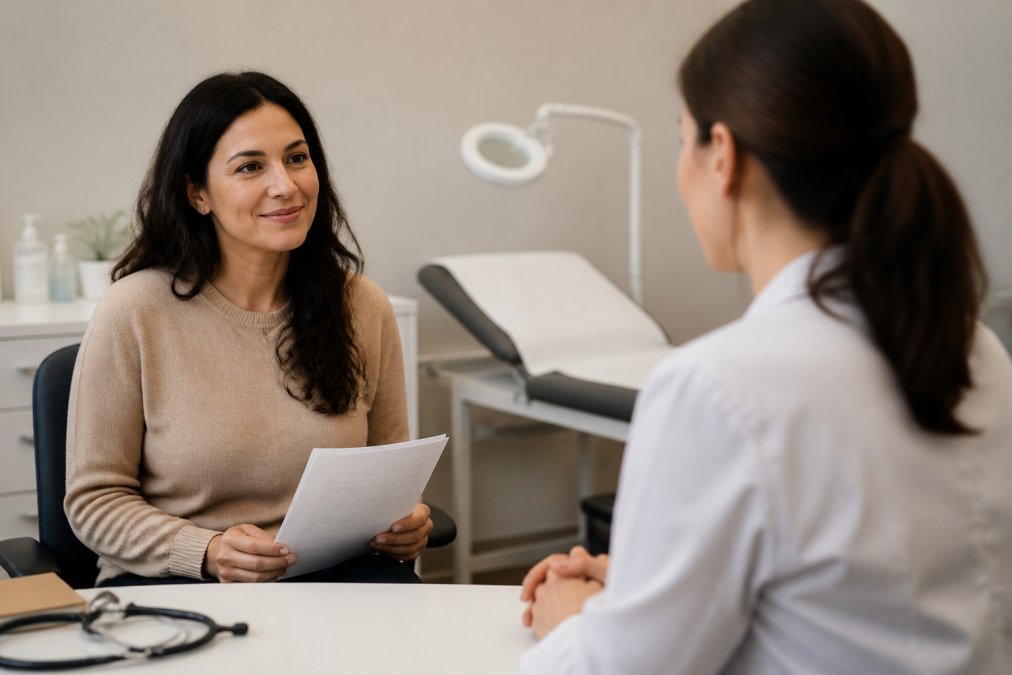
Preparation makes your consultation productive. You'll discuss your symptoms, medical history, and diagnostic options. Come organised and ready to advocate for yourself.
Questions to ask your consultant
Write these questions down and bring them to your appointment:
- "Do you think my symptoms suggest endometriosis?"
- "What imaging tests do you recommend?"
- "How reliable is ultrasound for diagnosing endometriosis?"
- "When would you recommend laparoscopy?"
- "What are the risks and recovery time for laparoscopy?"
- "What treatment options exist if I'm diagnosed?"
- "Can I see the scan results during my appointment?"
- "What happens if the imaging is inconclusive?"
These questions keep the conversation focused on diagnosis and next steps.
What to bring with you
Gather these items before your appointment:
- Your symptom diary (your most valuable document)
- List of current medications and supplements
- Previous medical records or scan reports
- Insurance details and identification
- Notepad for recording recommendations
- List of questions you've prepared
Bring a trusted person if you wish. A partner, friend, or family member can help you remember information and provide emotional support.
Step 4: Diagnostic Tests and What to Expect
Your consultant will recommend imaging to visualise your reproductive organs. Several options exist, each with different strengths.
Transvaginal ultrasound
Transvaginal ultrasound is the first-line imaging for endometriosis. A small probe is inserted into the vagina to get detailed images of your ovaries and uterus.
What to expect:
- The procedure takes 15-20 minutes
- You'll lie on your back with knees bent
- The probe is lubricated and gently inserted
- You may feel mild pressure or slight discomfort
- The sonographer will take multiple images
Transvaginal ultrasound is excellent for detecting ovarian cysts caused by endometriosis. It cannot always identify endometriosis on the peritoneum (the tissue lining your abdomen), but it's non-invasive and widely available.
MRI scanning
MRI (magnetic resonance imaging) provides detailed cross-sectional images of your pelvis. It's particularly useful for deep infiltrating endometriosis, the type that burrows into muscle and organs.
What to expect:
- The appointment takes 30-45 minutes
- You lie still inside a large cylindrical machine
- The machine makes loud banging noises
- No radiation is used
- You'll be asked to hold your breath periodically
- The scan is painless but requires patience
MRI is more sensitive than ultrasound for detecting deep endometriosis. However, it's more expensive and less widely available on the NHS. Your consultant will recommend MRI if they suspect deep infiltrating disease.
Diagnostic laparoscopy
Laparoscopy is the gold standard for endometriosis diagnosis (Checking your browser). A small camera is inserted through a tiny incision near your navel to directly visualise your pelvic organs.
What to expect:
- You receive general anaesthetic
- The surgeon makes 2-3 small incisions (5-10mm each)
- A camera (laparoscope) is inserted to examine your organs
- Tissue samples may be taken for biopsy
- The procedure takes 20-45 minutes
- Recovery takes 1-2 weeks
Laparoscopy is the only way to definitively confirm endometriosis through direct visualisation and biopsy.
Step 5: Understanding Your Results and Next Steps
Once imaging or laparoscopy is complete, your consultant will discuss findings with you. You'll learn whether endometriosis is present, how extensive it is, and what treatment options are available.
If endometriosis is confirmed, your consultant may recommend:
- Medical management (hormonal treatments to reduce pain and progression)
- Surgical excision (removal of endometriosis tissue)
- A combination of both approaches
- Lifestyle modifications (diet, exercise, stress management)
Frequently Asked Questions
What is the first step to getting an endometriosis diagnosis?
Start by documenting your symptoms in detail, including pain patterns, timing, and severity. Schedule an appointment with your GP and bring your symptom diary. Your GP will take a medical history, perform a physical examination, and may arrange an ultrasound scan. This initial consultation is crucial because it establishes a baseline for your symptoms and helps your GP decide whether a specialist referral is needed. Be specific about how endometriosis symptoms affect your daily life and work.
How long does it take to get an endometriosis diagnosis?
Diagnosis timelines vary significantly. Through the NHS, waiting times can range from several weeks to several months depending on local service capacity and referral urgency. Private specialist consultations often offer faster access, with some clinics providing combined diagnostic appointments where scanning and specialist assessment happen in a single visit. Many women experience delays because initial symptoms are attributed to normal period pain. A specialist gynaecologist can typically confirm or rule out endometriosis more quickly through targeted imaging and clinical assessment.
What tests will a gynaecologist perform to diagnose endometriosis?
Your gynaecologist may recommend transvaginal ultrasound as the first imaging test, as it can detect endometriosis in some cases. MRI scanning provides detailed imaging of affected areas. The only definitive diagnostic test is diagnostic laparoscopy, a minimally invasive surgical procedure where a small camera is inserted through the abdomen to visualise endometrial tissue. Your consultant will recommend the most appropriate tests based on your symptoms and clinical findings.
What should I include in a symptom diary for my GP appointment?
Record the date, time, and severity of pelvic pain on a scale of 1-10. Note where pain occurs and whether it radiates to other areas. Document pain triggers such as menstruation, intercourse, or bowel movements. Track your menstrual cycle, including flow heaviness and duration. Note how symptoms affect your work, relationships, and daily activities. Include any medications you've tried and their effects. List other symptoms like fatigue, bloating, or bowel issues. Bring this diary to your appointment; it provides objective evidence that helps your GP assess severity and determine whether specialist referral is appropriate.