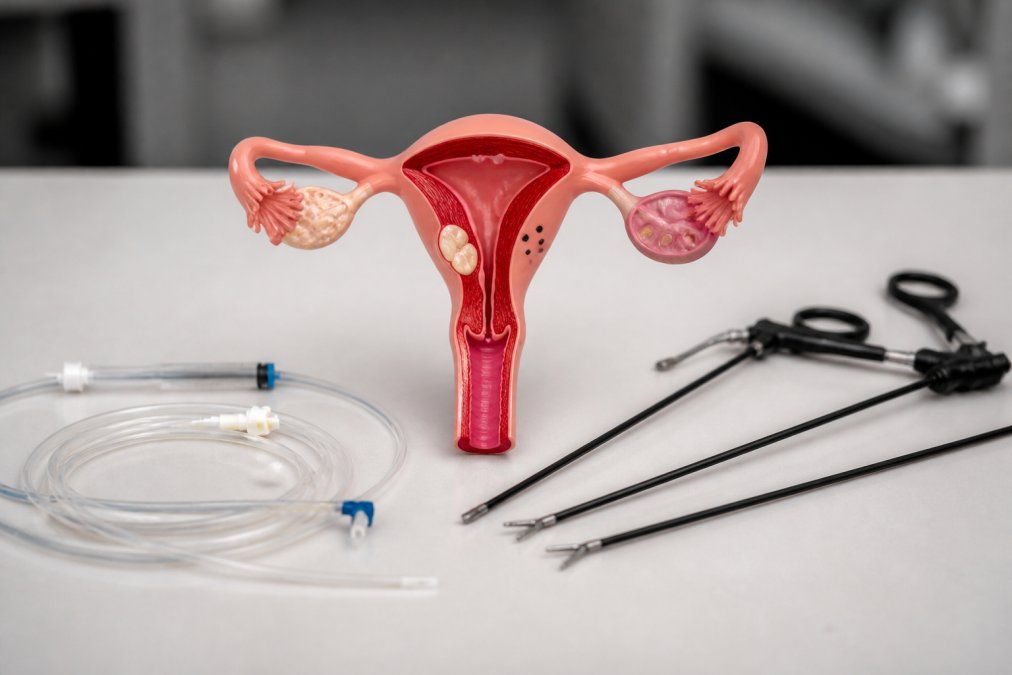
 comparison
Fibroid Embolisation vs Myomectomy: Which Is Right for You
Table of Contents
- Uterine Fibroid Embolisation vs Myomectomy: Overview
- How Each Procedure Works
- Fibroid Treatment Recovery Time: What to Expect
- Fertility After Myomectomy and Embolisation
- Minimally Invasive Fibroid Surgery: Comparing Approaches
- Risks and Complications of Both Procedures
- Which Procedure Is Right for You?
- Frequently Asked Questions
Last Updated: 21 September 2026
Uterine Fibroid Embolisation vs Myomectomy: Overview
When you're dealing with symptomatic fibroids, you're facing a choice between two fundamentally different approaches: fibroid embolisation and myomectomy procedures take entirely separate paths to the same problem. One uses interventional radiology to cut off blood supply. The other surgically removes the fibroids themselves. Both work. Both have trade-offs that matter deeply depending on your priorities.
The decision between uterine fibroid embolisation and myomectomy isn't straightforward because they suit different bodies, different fertility goals, and different tolerance for risk. This guide breaks down exactly what each procedure involves, how recovery differs, and which one aligns with your situation.
How Each Procedure Works
Both procedures address heavy bleeding, pelvic pain, and pressure symptoms. The mechanism behind each is where they diverge completely.
Uterine Artery Embolisation (UAE)
Uterine artery embolisation is a minimally invasive procedure where an interventional radiologist threads a catheter into the arteries supplying your fibroids, then injects particles that block blood flow to the fibroid tissue.
The radiologist makes a small puncture in your groin or wrist, navigates a thin catheter to the uterine arteries under imaging guidance, and releases embolic particles (tiny beads made of polyvinyl alcohol or other materials). These particles lodge in the small vessels feeding the fibroids, starving them of oxygen. The fibroids shrink over weeks to months as the tissue dies.
What makes fibroid embolisation appealing: you're not cutting. There's no surgical incision, no general anaesthesia required, and recovery happens faster than traditional surgery. You go home the same day or after an overnight stay. Most women return to light activity within a week.
The catch is that embolisation doesn't remove the fibroid tissue itself, it kills it. Dead fibroid material can take months to fully reabsorb. Some women experience post-embolisation syndrome: pelvic pain, fever, and nausea in the days after the procedure as the fibroids break down. It usually resolves within a week but can be uncomfortable.
Myomectomy
Myomectomy is surgical fibroid removal where a gynaecologist makes incisions to access and remove individual fibroids while preserving your uterus.
The approach varies by fibroid location and size. Laparoscopic myomectomy uses small incisions and a camera, best for fibroids on the outer surface of the uterus. Hysteroscopic myomectomy removes fibroids protruding into the uterine cavity through the cervix, no external incisions needed. Open myomectomy (abdominal incision) handles larger or deeply embedded fibroids.
The advantage is definitive: fibroids are physically removed. No dead tissue lingering. No post-embolisation syndrome. The uterus remains intact and functional. If you want to become pregnant, myomectomy preserves that option more reliably than embolisation.
The downside is surgical recovery. Even laparoscopic myomectomy means general anaesthesia, post-operative pain, and 2-4 weeks before you're back to normal activity. Hysteroscopic myomectomy is gentler, but only works for specific fibroid positions. Open myomectomy carries higher blood loss risk and longer recovery.
Fibroid Treatment Recovery Time: What to Expect
Recovery speed is often the deciding factor. If you can't afford weeks away from work, embolisation wins. If you prioritise complete fibroid removal, myomectomy is worth the longer healing.
Embolisation recovery: Most women experience cramping and pelvic discomfort for 24-48 hours after UAE. You'll need someone to drive you home. Return to desk work within 3-5 days. Heavy lifting and strenuous exercise: wait 2-3 weeks. Full recovery typically takes 4-6 weeks, though many women feel substantially better by week two.
Myomectomy recovery: Laparoscopic approaches allow discharge within 24 hours, but you'll feel sore for 1-2 weeks. Return to light activity around week two, full activity by week 4-6. Hysteroscopic myomectomy is gentler, some women return to normal activity within days. Open myomectomy requires 4-6 weeks before you're truly back to baseline, with restrictions on heavy lifting for 8 weeks.
The recovery difference matters in practice. If your work is physically demanding or you have childcare responsibilities, embolisation's faster timeline is genuinely valuable. If you can manage a 4-week recovery window, myomectomy's completeness might be worth it.
Fertility After Myomectomy and Embolisation
This is where the choice becomes personal. If you're planning pregnancy, the data matters.
Myomectomy preserves and often improves fertility. Removing fibroids that distort the uterine cavity or block fallopian tubes eliminates mechanical barriers to conception. Women who struggled to conceive often become pregnant after myomectomy. The uterus remains structurally normal post-surgery.
Embolisation's impact on fertility is less certain. The procedure doesn't directly damage the uterus, but it does affect blood supply to the entire organ, not just the fibroids. Some studies suggest embolisation may reduce ovarian reserve or affect endometrial function, though this remains debated. Pregnancy after embolisation is possible, but conception rates are lower than after myomectomy. If you're under 40 and want biological children, myomectomy is the safer choice.
For women who've completed childbearing or aren't planning pregnancy, this distinction matters less. Embolisation's faster recovery becomes the primary advantage.
Minimally Invasive Fibroid Surgery: Comparing Approaches
"Minimally invasive" applies to both procedures, but the term means different things.
Laparoscopic myomectomy is genuinely minimally invasive, small incisions, camera guidance, faster recovery than open surgery. It's the gold standard for women wanting fibroid removal with minimal tissue trauma. The surgeon can remove multiple fibroids in one session.
Hysteroscopic myomectomy is the least invasive surgical option, no abdominal incisions at all. Recovery is days, not weeks. The limitation: it only works for fibroids protruding into the uterine cavity. Submucosal fibroids are ideal candidates.
Uterine artery embolisation is minimally invasive in a different sense, no surgical incisions, catheter-based, same-day or next-day discharge. But you're not removing anything, and the recovery advantage diminishes if post-embolisation syndrome develops.
For women seeking the fastest return to normal activity without surgical recovery, hysteroscopic myomectomy (when anatomically suitable) edges out both alternatives. For those with fibroids unsuitable for hysteroscopic removal, laparoscopic myomectomy offers good balance of invasiveness and effectiveness.
| Approach | Incisions | Anaesthesia | Recovery Timeline | Best For |
|---|---|---|---|---|
| Hysteroscopic Myomectomy | None (cervical access) | General or spinal | Days to 1 week | Submucosal fibroids, fastest recovery |
| Laparoscopic Myomectomy | 2-3 small (5-10mm) | General | 2-4 weeks | Intramural or subserosal fibroids, complete removal |
| Uterine Artery Embolisation | Single groin/wrist puncture | Conscious sedation | 4-6 weeks | Rapid symptom relief, multiple fibroids |
Risks and Complications of Both Procedures
Neither procedure is risk-free. Understanding the specific complications helps you weigh the trade-offs honestly.
Embolisation risks: Off-target embolisation can block blood vessels to the ovary, potentially affecting ovarian function. Infection is rare but serious. Uterine necrosis (tissue death affecting the entire organ) occurs in fewer than 1% of cases but requires emergency hysterectomy. Post-embolisation syndrome causes temporary but significant pain. Fibroid expulsion, dead fibroid tissue passing through the cervix, happens occasionally and can require intervention.
Myomectomy risks: Surgical bleeding is the primary concern, especially with large or deeply embedded fibroids. Infection, anaesthesia complications, and blood clots are standard surgical risks. Uterine perforation during hysteroscopic removal can occur. Scar tissue (adhesions) can form after open myomectomy, potentially affecting fertility or causing chronic pain. Fibroid recurrence happens in roughly 15-20% of women within 5-10 years, though this varies by fibroid type and surgical technique (pubmed.ncbi.nlm.nih.gov).
Both procedures carry a small risk of needing emergency hysterectomy if complications develop. The risk is lower with embolisation than myomectomy, but it exists with both.
At a specialist practice, the focus is on minimising these risks through advanced laparoscopic technique and careful patient selection. Experience in complex gynaecological surgery means choosing the approach that suits your anatomy and goals, not the one that's easiest to perform.
Which Procedure Is Right for You?
The decision comes down to four questions.
Are you planning pregnancy? Myomectomy is the safer choice. Embolisation's effect on fertility remains uncertain, and the uterus's structural integrity matters for conception and pregnancy.
Do you need rapid symptom relief? Embolisation works faster for heavy bleeding and pelvic pressure. Symptoms improve within weeks. Myomectomy takes longer to deliver full relief because post-operative swelling subsides gradually.
How many fibroids do you have? Multiple large fibroids favour embolisation, one procedure addresses them all.
Frequently Asked Questions
What is the main difference between uterine fibroid embolisation and myomectomy?
Uterine fibroid embolisation (UFE) is a minimally invasive procedure where an interventional radiologist blocks the blood vessels supplying the fibroids, causing them to shrink. Myomectomy is surgical removal of the fibroids themselves, performed by a gynaecologist either through open surgery, laparoscopy, or hysteroscopy. UFE requires no incisions in the uterus, whilst myomectomy involves removing fibroids directly from the uterine wall.
Which procedure is better for preserving fertility?
Myomectomy is generally preferred if fertility is a priority, as it removes fibroids whilst preserving the uterus intact. Studies show pregnancy rates after myomectomy range from 40-60% depending on fibroid size and location. UFE carries a small risk of uterine damage or reduced blood flow that could affect future pregnancy, though many women do conceive after embolisation. Discuss your fertility goals with your consultant to choose the best option.
What are the recovery times for uterine fibroid embolisation compared to myomectomy?
UFE typically involves 1-2 days in hospital and 1-2 weeks before returning to normal activities, though some women recover faster. Myomectomy recovery depends on the approach: laparoscopic myomectomy takes 2-4 weeks, whilst open myomectomy requires 4-6 weeks. UFE generally offers quicker initial recovery, though post-embolisation syndrome (pain, fever, nausea) can last several days and affect your return to work.
Are there risks associated with uterine fibroid embolisation?
UFE carries risks including infection, allergic reaction to contrast dye, and post-embolisation syndrome. Less commonly, ovarian damage, uterine necrosis, or incomplete fibroid shrinkage can occur. The procedure is not recommended if you plan pregnancy soon or have active infection. Myomectomy risks include bleeding, infection, and adhesions, though these are generally well-managed. Your consultant will assess your individual risk profile.